
Accessible travel guide for Tanzania
Everything you need to plan a safe, comfortable trip to Tanzania with a disability or reduced mobility, from choosing the season and arriving at the airport to vehicles, parks, lodges and health. Written by our team, who plan accessible safaris every week.
Plan my tripChat on WhatsApp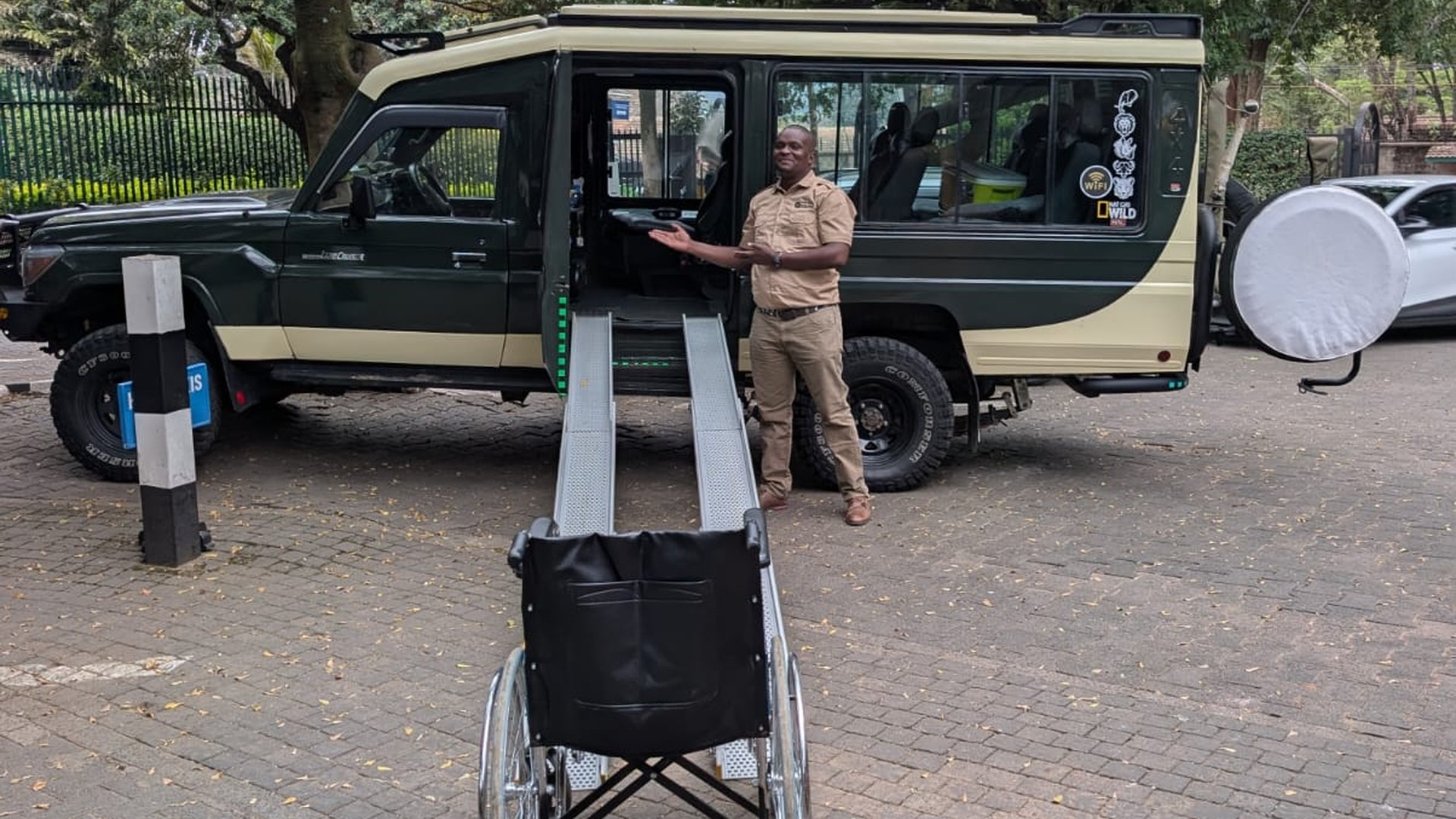
In this guide
Is Tanzania accessible? · Planning step by step · Getting there · Getting around · Parks and access · Accommodation · Health and medical · Different access needs · Packing checklist
Is Tanzania accessible?
Tanzania's public infrastructure is still developing: pavements are uneven, kerbs are high and few public buildings have ramps. But a safari is one of the most accessible adventures in Africa, because most wildlife viewing happens from a vehicle. With the right vehicle, lodges checked in advance and a team that understands your needs, wheelchair users, seniors and travellers with sensory or medical conditions enjoy the Serengeti, the Ngorongoro Crater and Zanzibar every year.
Planning step by step
- Share your needs early. Tell us how you move, transfer and use the bathroom, any equipment you bring, your stamina and medical needs. The more we know, the better we can match vehicles and rooms.
- Choose the season. June to October brings dry, smoother roads; January and February are warmer. See the best time to visit Tanzania.
- Pick your pace. Fly between parks to cut long drives, and allow rest days. Two nights per lodge is usually more comfortable than one.
- Book accessible rooms early. Most lodges have only one or two adapted rooms, which sell out 9–12 months ahead in peak season.
- Sort documents. eVisa, the mandatory travel insurance, yellow fever certificate if needed, and Flying Doctors cover.
Getting there
| Arrival point | Best for | Access notes |
|---|---|---|
| Kilimanjaro International (JRO) | Northern safari circuit | Request airline wheelchair assistance; our accessible vehicle meets you at arrivals. VIP terminal and lounges available. |
| Arusha Airport (ARK) | Light-aircraft flights to the parks and Zanzibar | Small terminal; boarding is by steps with assistance. |
| Julius Nyerere International, Dar es Salaam (DAR) | Southern parks and the coast | Larger airport with assistance services. |
| Zanzibar (ZNZ) | Beach holidays | We arrange step-free transfers to your hotel. |
| Nairobi, Kenya, overland | Combining Kenya and Tanzania | Our wheelchair-accessible shuttles run door to door to Arusha and Moshi. |
Getting around
- Safari vehicles: Land Cruisers with pop-up roofs and portable or dual-track ramps. Tell us if you prefer to transfer to a seat or stay in your chair.
- Transfers: rear-ramp vans let you travel seated in your own wheelchair; swivel-seat vans suit guests who can transfer.
- Light aircraft: narrow steps and small cabins. Our team and the airline lift and assist; folding wheelchairs travel in the hold.
- Roads: tarmac between Arusha and the parks, but bumpy tracks inside them. Cushions and planned rest stops help with pain and fatigue.
Parks and access
Serengeti
Wildlife viewing from the vehicle, accessible lodges and fly-in options.
Accessible Serengeti →Ngorongoro Crater
Game drives on the crater floor; rim lodges at about 2,300 m are cool at night.
Tarangire & Lake Manyara
Short drives from Arusha and great elephant viewing: ideal for a gentle first safari.
Balloon safaris
Possible for many guests with assistance; we confirm with the operator.
Balloon details →Zanzibar
Modern beach resorts work well; Stone Town is harder, so we plan routes.
Accessible Zanzibar →Southern parks
Nyerere and Ruaha are wilder, with longer distances; flying in is often best.
Accommodation
Access varies from room to room, so we never rely on the word "accessible" alone. For each stay we check:
- The route from the vehicle to reception, dining areas and your room
- Door widths, thresholds and steps
- Roll-in or walk-in showers, shower seats and grab rails
- Bed height and space to turn a wheelchair
- Power for charging wheelchairs and medical devices, and fridge space for medication
Browse more than 190 hotels, lodges and camps, including properties we have inspected such as Kubu Kubu Tented Lodge, Ngorongoro Safari Lodge, Ndutu Safari Lodge and Moivaro Coffee Lodge.
Health and medical
- See a travel clinic six to eight weeks before you go about malaria prevention and vaccines.
- Carry medication in your hand luggage with copies of prescriptions and a doctor's letter for medical devices.
- Arusha and Dar es Salaam have private hospitals; serious cases are usually evacuated to Nairobi, which is why we recommend Flying Doctors cover.
- Our team is trained in First Aid and Basic Life Support by Amref.
Planning for different access needs
Wheelchair users
Ramp vehicles, step-free rooms, roll-in showers and help with every transfer.
Wheelchair safaris →Seniors
Gentle pacing, flights between parks and comfortable lodges.
Senior safaris →Blind and partially sighted travellers
Guides who describe scenes in detail, sound-rich experiences and help with orientation at lodges.
Deaf and hard of hearing travellers
Written itineraries, visual briefings and guides who adapt communication.
Neurodivergent travellers
Quiet lodges, predictable schedules and smaller groups.
Medical needs
Planning around dialysis, oxygen or other treatment schedules where possible.
Packing checklist
- Passport, eVisa approval, insurance documents and yellow fever certificate if needed
- Medication for the whole trip plus extra, in hand luggage
- Wheelchair spare parts, puncture kit and tools
- Chargers with type D or G plug adapters (230 V)
- Warm layers for early drives, sun hat and sunscreen
- Pressure-relief cushion for long drives
- Soft bags for light aircraft (around 15–25 kg limits)
- Reusable water bottle; plastic carrier bags are banned in Tanzania
More travel guides
Tanzania FAQs · Weather · Travel advice · Sustainable travel
Frequently asked questions
Is Tanzania accessible for wheelchair users?
Public infrastructure is limited, but safaris are very accessible with the right support. We use ramp-equipped vehicles, accessible transfers and lodges we have checked for step-free access.
Can I bring my own wheelchair on safari?
Yes. Manual and powered wheelchairs can travel with you. For light aircraft, folding chairs are easiest; tell us the size and weight so we can plan.
How far ahead should I book an accessible safari in Tanzania?
For July to October and the festive season, book 9–12 months ahead, as accessible rooms are limited. For other months, three to six months is usually enough.
Do you plan safaris for blind or deaf travellers?
Yes. We adapt guiding, communication and lodges to sensory needs. Tell us what works best for you.
Plan your accessible Tanzania trip
Tell us your dates, who is travelling and what support you need. A specialist replies within 24 hours with ideas and a tailored quote.
Start planningChat on WhatsApp