
Best time to visit Tanzania
The right time to travel depends on what you want to see, the weather you are comfortable in and how you like to travel. This guide explains Tanzania's seasons month by month, where the Great Migration is, and what each season means for travellers with mobility or health needs.
Plan my tripChat on WhatsApp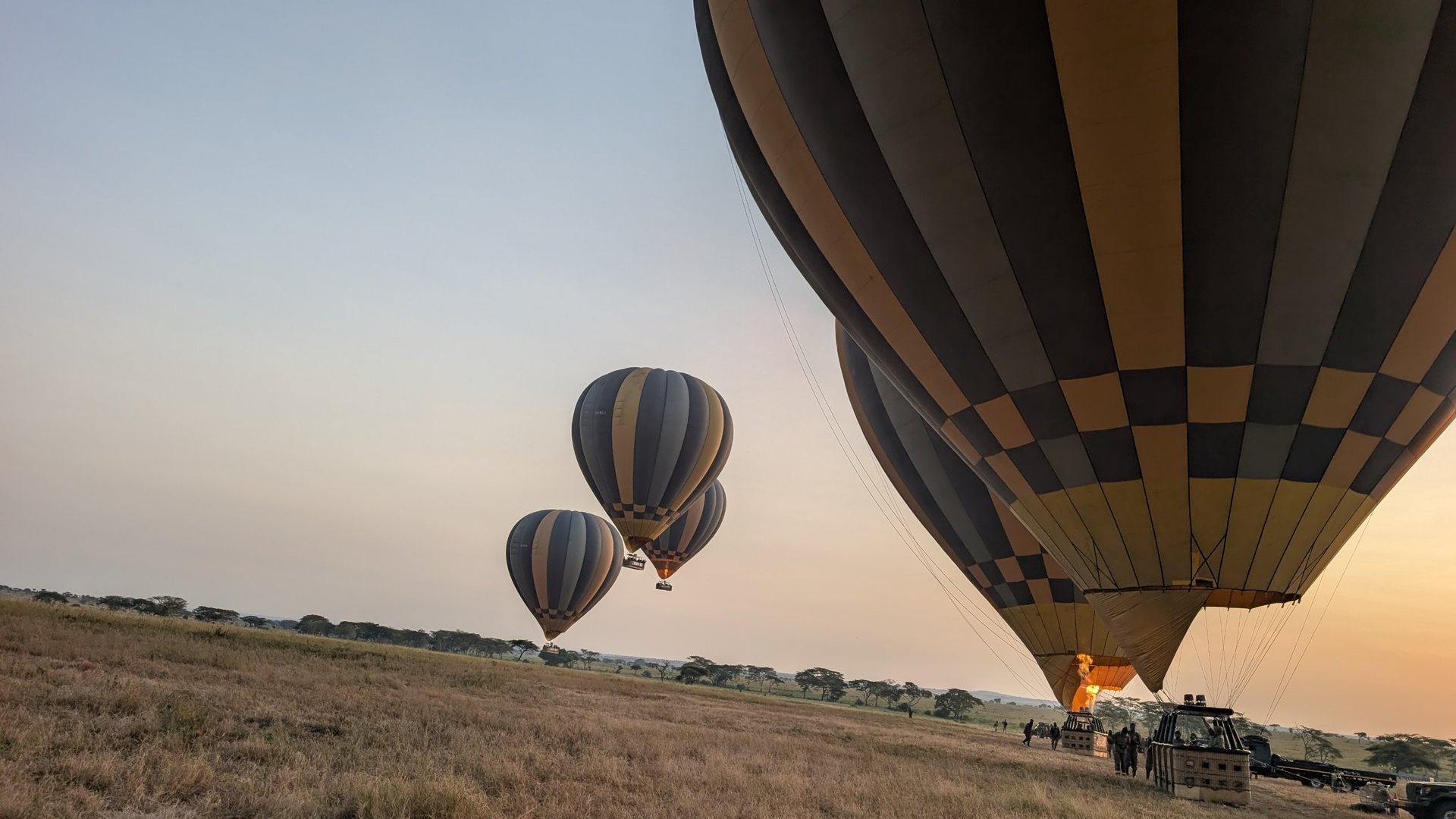
Tanzania's seasons at a glance
Tanzania sits just south of the equator, so the year is shaped by rain and altitude rather than summer and winter. The safari parks of the north lie on a high plateau, with warm days and cool nights, while Zanzibar and the coast stay hot and humid all year.
Dry season: June to October
Clear skies, sparse vegetation and animals gathered around water make wildlife easy to find. Roads are firmer, which means smoother, more comfortable drives.
Short rains: November to mid-December
Brief showers turn the plains green. Fewer visitors, lower prices and the arrival of migrant birds.
Green season: January to March
Mostly dry between the rains, with calving in the southern Serengeti and lush scenery.
Long rains: mid-March to May
The wettest period, with the lowest prices. Some camps close and tracks can be muddy, so we plan shorter routes.
Zanzibar & the coast
Best from June to October and December to February. Mid-March to May is the wettest time on the islands.
Accessible Zanzibar →Kilimanjaro views
Clear views of the mountain are most likely on dry-season mornings and in January and February.
Kilimanjaro transfers →Month by month
| Month | Weather | Wildlife & migration | Our tip |
|---|---|---|---|
| January | Warm and mostly dry after the short rains; plains are green | Herds gather on the short-grass plains around Ndutu; calving begins late in the month | Great all-round month; dry roads make game drives smoother |
| February | Hot and mostly dry | Peak calving in the southern Serengeti, with lions, cheetahs and hyenas very active | Our top pick for predator action; book Ndutu lodges early |
| March | Dry start; the long rains usually arrive mid-month | Herds begin drifting north and west | Good value; some rain means softer tracks, so we plan shorter drives |
| April | The wettest month in most areas | Resident wildlife stays in the Serengeti, Ngorongoro and Tarangire | Lowest rates and quiet parks; some camps close and roads can be muddy |
| May | Rain eases towards the end of the month; very green | Migration moves towards the Western Corridor | Late May offers pre-season prices and fresh landscapes |
| June | Dry season begins; cool mornings and evenings | Herds in the Western Corridor near the Grumeti River | Excellent conditions; pack warm layers for early drives |
| July | Dry, clear and mild | First Mara River crossings in the northern Serengeti; elephants gather in Tarangire | Peak season: book 9–12 months ahead for accessible rooms |
| August | Dry and busy | River crossings in full swing in the north | School holidays; the most popular month for families |
| September | Dry and warm | Crossings continue; crowds start to thin | One of the best months overall |
| October | Mostly dry and warmer; first clouds late in the month | Big concentrations around rivers and waterholes, especially Tarangire | Shoulder pricing begins; superb game viewing |
| November | Short rains bring quick, often afternoon showers | Herds head back south through the central Serengeti | Lower prices, migrant birds arrive; whale shark season opens off Mafia Island |
| December | Light rain early; dry spells common | Herds settle in the southern Serengeti ahead of calving | Festive season from mid-December; book early |
Choosing your season when you have access needs
- Smoother drives: the dry months (June to October) have firmer roads and fewer bumps, which helps if you have back pain, spinal injuries or fatigue.
- Temperature: mornings on the Ngorongoro rim and in the Serengeti can drop to around 5–10°C in June and July. If cold affects your muscles or circulation, January, February and October are warmer.
- Heat sensitivity: the coast is hottest from December to March. For conditions such as MS, we choose shaded, air-conditioned rooms and early or late activities.
- Quieter parks: November, early December, March and late May are calmer, with more space at viewpoints and easier lodge availability.
- Accessible rooms book out first: lodges usually have only one or two adapted rooms, so book 9–12 months ahead for July to September and the festive season.
Where to go and when
| Area | Best time | Why |
|---|---|---|
| Serengeti | All year; June–October and January–February are the highlights | Migration river crossings in the north, calving in the south |
| Ngorongoro Crater | All year | Resident wildlife on the crater floor; game viewing is entirely by vehicle |
| Tarangire & Lake Manyara | July–October | Large elephant herds gather along the Tarangire River |
| Nyerere (Selous) & Ruaha | June–October | Wildlife concentrates along the rivers; many camps close in the long rains |
| Zanzibar | June–October, December–February | Dry, sunny beach weather |
| Balloon safaris | All year in central Serengeti and Tarangire; seasonal elsewhere | Calm sunrise conditions |
Prices and crowds through the year
| Period | Demand | What to expect |
|---|---|---|
| July – September | Peak | Highest rates and busiest parks |
| Mid-December – early January | Peak (festive) | Holiday pricing |
| January – February, June, October | High / shoulder | Excellent conditions with slightly softer rates |
| November – mid-December | Low shoulder | Good offers and quieter parks |
| April – May | Low | Lowest rates; some camps closed |
Frequently asked questions
When is the best time to visit Tanzania for a safari?
June to October is the classic dry season, with easy game viewing and firmer roads. January and February are also excellent, especially for calving in the southern Serengeti.
When can I see the Great Migration in Tanzania?
The herds are in the southern Serengeti from December to March, the Western Corridor around June, and the northern Serengeti for Mara River crossings from July to October.
What is the best time for a wheelchair accessible safari?
The dry months from June to October offer the smoothest roads and easiest transfers. January and February are a good warmer alternative. Book accessible rooms early, as they are limited.
Is it worth visiting Tanzania in the rainy season?
Yes, if you value lower prices and quieter parks. April and May are the wettest months, so we plan shorter drives and choose lodges with good all-weather access.
When is the best time to visit Zanzibar?
June to October and December to February offer the most reliable beach weather. Mid-March to May is the wettest period.
Plan your trip for the right season
Tell us your dates, who is travelling and what support you need. A specialist replies within 24 hours with ideas and a tailored quote.
Start planningChat on WhatsApp